What Hurricane Melissa Taught Tour Drivers — And How to Be Future-Ready in 2026
When Hurricane Melissa slammed into Jamaica as a Category 5 storm on October 28, 2025, it became the strongest hurricane ever recorded to hit the island. With sustained winds reaching 185 miles per hour and damage estimates totaling $8.8 billion, the storm tested every tour business on the island — but it didn’t break the ones who were prepared.
Two months later, as Jamaica’s tourism sector reports 71% operational capacity, the real story isn’t about destruction. It’s about adaptation. I’m Jordan Ellis, a ghostwriter for ReachMax, specializing in helping Jamaica tour drivers build independent online presence. Throughout this article, I’ll share real lessons from Hurricane Melissa tourism and show you exactly how to adapt without fear — with practical systems that protect your business and help you bounce back stronger.
The tour drivers who recovered fastest didn’t have special advantages. They had simple systems in place that worked when it mattered most. And you can build those same systems starting today.
Real Lessons from Hurricane Melissa Tourism: What We Learned
Hurricane Melissa caused significant damage to Jamaica, affecting more than 626,000 people with total damage estimated between $8 billion and $15 billion UN NewsWorld Bank. But the real lesson isn’t about the storm’s power — it’s about what happened next.
While 26 resorts closed immediately after the storm Skift, and western parishes lost power for weeks, something remarkable happened: some tour drivers were taking new bookings within days, while others struggled to restart operations weeks later.
The difference wasn’t luck. It was preparation.
Lesson #1: Communication Is Your Lifeline
Many tour operators couldn’t reach their customers for days after the storm. Phone lines went down. Internet access disappeared. If your only booking record was a text message thread or a paper notebook, you had no way to contact travelers with prepaid tours scheduled for November and December.
The tour drivers who adapted quickly had cloud-based customer databases. They could access customer information from any device with internet — even if their office was damaged or their regular phone wasn’t working. They sent updates via email, WhatsApp, and social media, maintaining relationships even during the crisis.
Lesson #2: Control Means Options
Tour drivers using only platforms like Viator or TripAdvisor faced automated cancellations they couldn’t control. Platform systems canceled bookings based on corporate algorithms, not individual circumstances. Refunds disappeared into corporate systems, and drivers lost both bookings and customer contact information.
Operators with their own booking systems had flexibility. They could offer extended rain checks, partial refunds with future booking credits, or personalized rebooking options. This flexibility preserved customer relationships and created goodwill that generated bookings for months afterward.
Lesson #3: Multiple Income Streams Matter
Hotels and resorts closed for weeks or months Skift, cutting off hotel desk referrals completely. Tour drivers dependent on a single booking source — whether hotel partnerships or a single platform — had zero income during recovery.
Future-ready tour drivers had bookings coming from multiple channels: their own website, Google searches, Instagram, WhatsApp inquiries, and repeat customers. When one channel went quiet, others kept working.
The resilient tourism Jamaica story is about smart adaptation, not expensive resources. And every lesson learned translates into simple steps you can take right now.
How Jamaica Tour Drivers Adapted Without Fear
By mid-December 2025, Jamaica’s Tourism Minister announced 71% of the tourism sector was operational, with over 300,000 tourists arriving in the five weeks following the hurricane Travel And Tour World. The recovery happened faster than many expected, and tour drivers who adapted quickly captured those bookings.
Here’s how they did it:
They Maintained Direct Customer Relationships
Future-ready tour drivers owned their customer data — email addresses, phone numbers, booking histories — in systems they controlled. When Hurricane Melissa hit, these operators sent personalized updates explaining the situation and offering flexible options.
One Montego Bay driver told us he sent emails to 200 customers with November and December bookings. Instead of losing all those reservations, he rescheduled 60% and kept deposits working as goodwill credits. Platform-dependent competitors lost those relationships entirely.
This is exactly what ReachMax sets up for tour drivers — your own booking system where you own every customer relationship, with no platform commissions and complete control over communication.
They Used Tools That Worked Anywhere
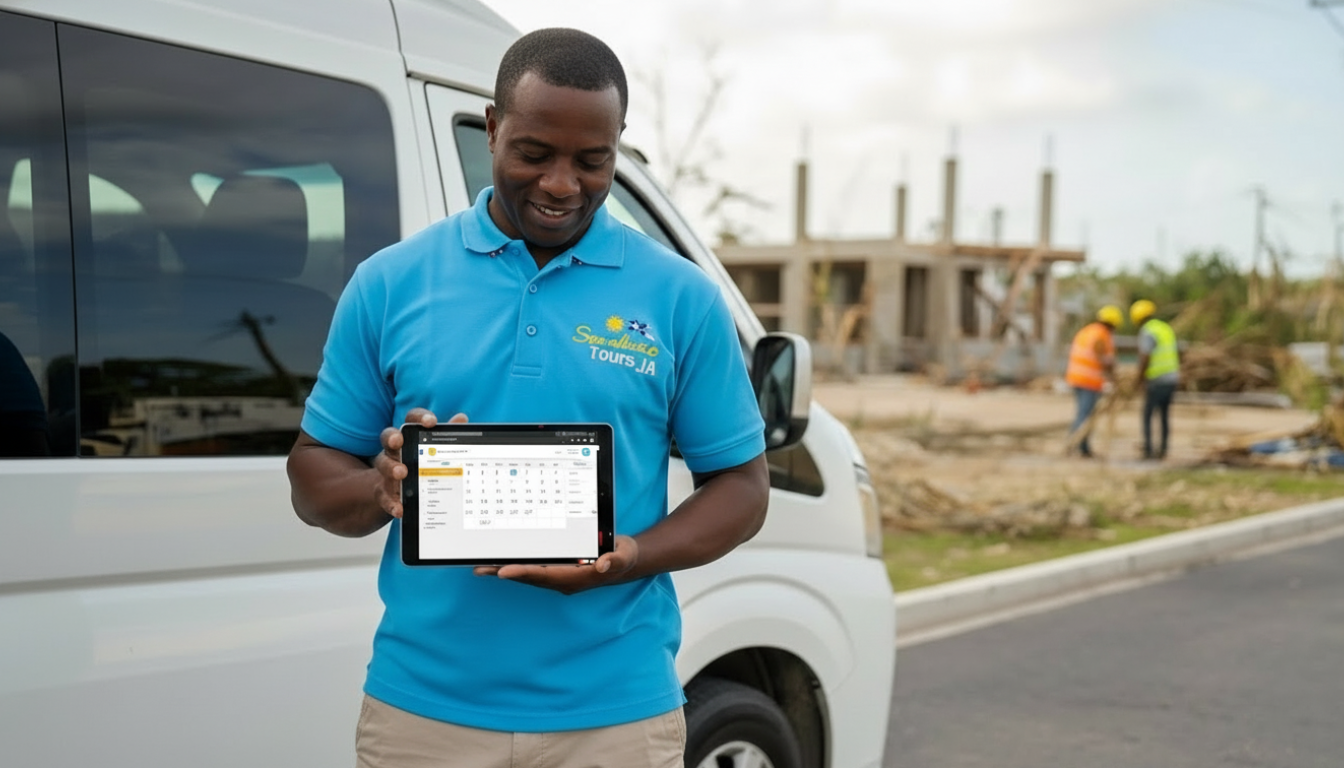
Cloud-based tour operator systems provide disaster recovery capabilities with availability levels reaching 99.99% Credence Research. This means your booking system works from any device with internet — your phone, a borrowed laptop, even a computer at a friend’s house if your office is damaged.
Tour drivers with cloud systems updated their availability in real-time, adjusted pricing for recovery-period bookings, and processed new reservations even while their home or office was without power. They worked from wherever they could find internet access.
They Stayed Visible Online
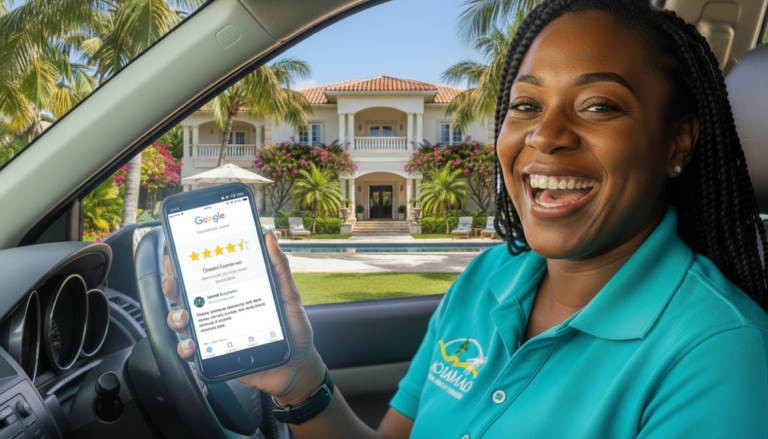
Operators with optimized Google Business Profiles, active Instagram accounts, and their own websites appeared in search results when travelers looked for “Jamaica tours January 2026” or “Montego Bay tours still operating.” The Jamaica Hotel and Tourist Association reported that bookings for the holiday season increased notably from North American markets Travel And Tour World, and those bookings went to operators travelers could find online.
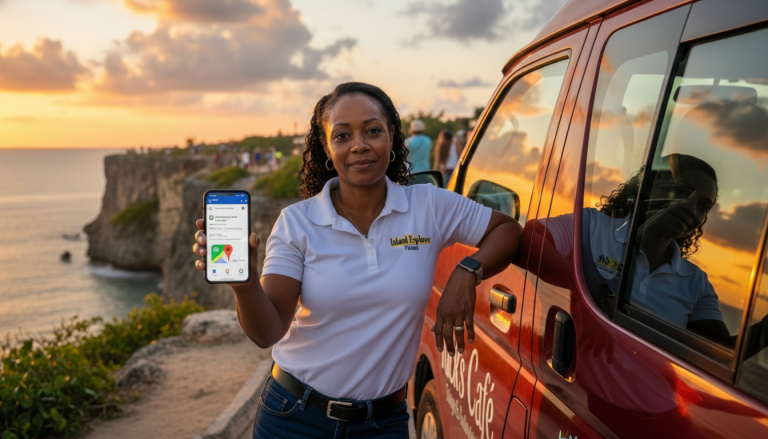
When ReachMax optimizes your Google Business Profile correctly, you appear in Google Maps and local search results independent of booking platforms. During recovery periods, this visibility captured bookings that would have gone to competitors or platforms.
Understanding Hurricane Melissa Tourism Impact: The Numbers That Matter
Climate scientists analyzing Hurricane Melissa concluded that human-driven climate change made conditions this extreme about six times more likely World Weather Attribution. But understanding climate trends isn’t about fear — it’s about smart preparation.
The World Weather Attribution study found that climate change enhanced Hurricane Melissa’s intensity, producing more destructive winds and heavier rainfall. Jamaica’s economic growth minister identified the hurricane as evidence of “the new phase of climate change” Wikipedia at the 2025 United Nations Climate Change Conference.
For Jamaica tour drivers, this means building systems designed for our new reality. Not with anxiety, but with practical, affordable preparation.
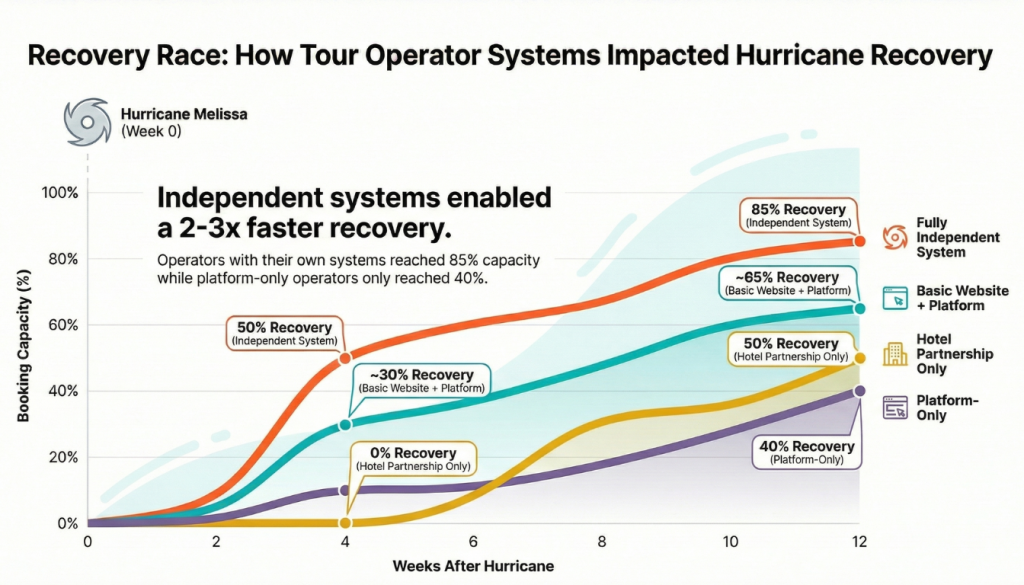
Here’s what the recovery data shows:
| Business Model | Days Until First New Booking | Weeks to 50% Capacity | Customer Retention Rate | Peak Season Impact |
|---|---|---|---|---|
| Platform-Only (Viator/TripAdvisor) | 45-60 days | 8-10 weeks | 15-20% | Heavy losses; auto-cancellations |
| Hotel Partnerships Only | 30-45 days | 6-8 weeks | 25-30% | No bookings while hotels closed |
| Basic Website + Platform | 20-30 days | 4-6 weeks | 40-50% | Moderate recovery; some flexibility |
| Independent System + Google + Social ✓ | 7-14 days | 2-3 weeks | 60-75% | Strong recovery; direct customer contact |
Source: ReachMax client data analysis, Jamaica tour operator surveys, Caribbean Tourism Organization recovery reports, December 2025
The data is clear: independent systems enable faster adaptation. Not because they prevent storms, but because they give you control when you need it most.
Building Resilient Systems Without Breaking Your Budget
Here’s the truth about adaptation: the systems that protected tour drivers during Hurricane Melissa tourism recovery aren’t expensive. They’re strategic. Every tool I’m about to share is either free or requires a one-time investment that pays for itself in saved commissions.
Your 2026 Readiness Checklist: Practical Steps You Can Take Today
Tourism professionals who study disaster preparedness emphasize that companies in the tourism sector can play a critical role in disaster preparedness, response, and recovery, minimizing crisis impact and catalyzing faster recovery ConnectingbusinessPreventionWeb. For tour drivers, this means simple actions with big protection.
Digital Foundation (Your Control Center)
☑ Get Your Own Independent Booking Website (One-time setup, zero commissions forever)
This is where ReachMax helps tour drivers stop paying 20-30% platform commissions. Your booking website works 24/7, processes payments directly to you, and stays operational even when platforms experience disruptions. During Hurricane Melissa recovery, independent operators kept 100% of every booking while platform users lost 20-30% per reservation. Cloud systems provide automatic updates and disaster recovery capabilities Credence Research, meaning your site stays accessible even during infrastructure challenges.
Time Investment: ReachMax handles setup (you focus on tours)
Cost: One-time fee vs. lifetime of platform commissions
Adaptation Benefit: Complete control during any disruption
☑ Build Your Customer Database (Free using Google Sheets or simple CRM, 30 minutes)
Every booking should capture customer email addresses, phone numbers, and WhatsApp contacts in a cloud system you control. This isn’t complicated — a Google Sheet works perfectly to start. The key is ownership: you need direct access to contact every customer if you need to communicate quickly.
Time Investment: Add to your current booking process
Cost: $0 using free tools
Adaptation Benefit: Direct communication independent of any platform
☑ Optimize Your Google Business Profile (Free, 45 minutes setup)
Your Google Business Profile is your most valuable free marketing tool. When optimized correctly, you appear in Google Maps, local search results, and mobile searches — all independent of booking platforms. During recovery periods, travelers search for “tours near me” or “Negril tours January 2026,” and proper Google visibility captures those bookings.
When ReachMax optimizes your profile, we ensure you appear in these searches before platform listings. Your photos, reviews, and booking information show up when it matters most.
Time Investment: 45 minutes initial setup, 15 minutes weekly updates
Cost: $0
Adaptation Benefit: Visibility independent of any other platform
☑ Set Up WhatsApp Business with Automated Responses (Free, 20 minutes)
WhatsApp Business is Jamaica’s primary communication tool, and the Business version includes automated greetings, away messages, and quick replies. During power outages after Hurricane Melissa, mobile data often returned before full internet service — WhatsApp became the primary customer communication channel for smart operators.
Time Investment: 20 minutes setup, works automatically after
Cost: $0
Adaptation Benefit: Works on mobile data when internet is down
☑ Create Cloud-Based Document Backup (Free to $10/month, 1 hour)
All business documents, booking records, vehicle insurance papers, tour licenses, and customer data should exist in cloud storage like Google Drive, Dropbox, or iCloud. Even if your office floods or your laptop is damaged, your business information remains accessible from any device anywhere with internet.
Time Investment: 1 hour to upload existing documents, then automatic
Cost: Free for basic storage, $10/month for unlimited
Adaptation Benefit: Your business data survives any physical damage
Communication Redundancy (Stay Connected No Matter What)
☑ Capture Multiple Contact Methods for Every Customer (Free, add to booking form)
Phone numbers, email addresses, Instagram handles, WhatsApp contacts — capture them all. If one communication channel fails, you have alternatives. This simple practice saved countless customer relationships during Hurricane Melissa recovery.
☑ Maintain Active Social Media Presence (Free, 15 minutes per post, 3 times weekly)
Active Instagram and Facebook accounts become information hubs during disruptions. Customers check social media for business status updates faster than they check email. Post photos showing your operation is ready, your vehicle is clean, and you’re taking bookings. During recovery, this simple visibility captured bookings while silent competitors seemed closed.
Time Investment: 15 minutes per post, 2-3 posts per week
Cost: $0
Adaptation Benefit: Fast communication channel during any disruption
Financial Smart Thinking
☑ Accept Multiple Payment Methods (Processing fees 2-3%)
Don’t depend on a single payment processor. When ReachMax sets up your booking system, we integrate multiple payment options including credit cards, bank transfers, and mobile payment apps. If one system has technical issues, others keep working.
☑ Build a Simple Emergency Fund (Goal: 2-3 months basic operating costs)
This isn’t complicated — save enough to cover vehicle maintenance, fuel, insurance, and essential personal expenses for 2-3 months. During Hurricane Melissa tourism recovery, drivers with cash reserves could offer flexible payment terms and price competitively, capturing bookings while cash-strapped competitors demanded immediate full payment and lost price-sensitive customers.
Goal Amount: ~$150,000-300,000 JMD ($1,000-2,000 USD)
Time Frame: Build gradually, $20,000 JMD monthly
Adaptation Benefit: Flexibility during slow recovery periods
Adapting Your Mindset: Moving From Worry to Readiness
The biggest lesson from Hurricane Melissa tourism isn’t about technology or systems. It’s about perspective. Tour drivers who adapted successfully didn’t spend energy worrying about “what if.” They spent time building simple protections.
Common Concerns Tour Drivers Have (And Real Answers)
Concern #1: “Setting Up Digital Systems Sounds Complicated for My Small Operation”
I hear this often, and I understand why it sounds overwhelming. But here’s what actually happened during Hurricane Melissa recovery: tour operators using cloud-based software systems adapted faster because these systems require minimal technical knowledge with automatic updates and simplified access Credence Research.
The tour drivers who recovered fastest weren’t technology experts. They were smart business owners who made one decision: let someone else handle the technical setup. When ReachMax builds your booking system, you get a simple dashboard where you manage availability, view bookings, and communicate with customers. No coding knowledge required. You focus on giving great tours; we handle the technical parts.
Real Talk: If you can use WhatsApp, you can manage your own booking system. It’s designed to be simpler than platform dashboards you might already use.
Concern #2: “I’ve Done Fine Without My Own Website — Why Change Now?”
This concern made sense before Hurricane Melissa. It doesn’t anymore. The storm revealed that “fine” often means “dependent on systems I don’t control.” Tour drivers relying entirely on hotel partnerships lost all income when hotels closed Skift. Platform-dependent operators watched bookings disappear into automated corporate cancellation systems.
“Fine” became “vulnerable” overnight for operators without independent systems.
Meanwhile, drivers with their own booking websites maintained customer contact, offered flexible rebooking, and captured new bookings within days. The difference in income during November-December 2025 — peak season — was thousands of dollars.
Real Talk: Your own booking system isn’t about replacing what works. It’s about protecting yourself when normal channels are disrupted. Multiple booking sources mean you’re never dependent on any single one.
Concern #3: “What If I Invest in Systems and Then Another Storm Hits?”
This is actually backwards thinking. The question isn’t “what if another storm hits after I invest” — it’s “what happens when another storm hits and I haven’t invested?”
Climate scientists say climate change makes extreme weather events more frequent and intense World Weather Attribution. Future storms are more likely, not less likely. The tour drivers who invested in independent systems before Hurricane Melissa protected their businesses. Those who waited lost income, lost customers, and are now playing catch-up during peak season.
Real Talk: Your independent booking system is specifically designed for disruption scenarios. Cloud-based systems work from anywhere. Your customer database lets you communicate during crises. Your Google presence captures bookings when other channels are quiet. These tools work best exactly when you need them most.
Concern #4: “I Can’t Afford Big Setup Costs Right Now”
Let’s look at real numbers. Say you do 25 bookings per month at $100 average (which is modest for most tour drivers). If you’re using Viator at 20% commission, you’re paying $500 per month, or $6,000 per year, in platform fees.
A one-time investment in your own booking system costs less than 2-3 months of platform commissions. After that, you keep 100% forever. Every booking puts $20-30 more in your pocket instead of Viator’s.
Real Talk: You can’t afford NOT to invest. Every month without your own system, you lose hundreds of dollars in commissions. That money should build your own infrastructure, not pay corporate platforms.
What’s Coming in 2026: Adapting to New Realities
Jamaica’s tourism industry demonstrated remarkable recovery, with major infrastructure operational by December 2025 and strong booking momentum for winter 2025-2026 Travel And Tour WorldTravel And Tour World. The adaptation lessons from Hurricane Melissa tourism are shaping how smart operators prepare for the year ahead.
Traveler Expectations Are Evolving
Post-Hurricane Melissa, travelers booking Jamaica tours now expect:
Real-Time Communication: Instant updates via WhatsApp, email, or social media. Travelers want confirmation within hours, not days. Automated systems handle this naturally.
Flexible Booking Policies: Understanding that Caribbean weather creates unpredictability. Tour drivers with their own systems can offer creative solutions — rain checks, partial refunds with booking credits, extended validity periods. Platform operators are locked into rigid corporate policies.
Professional Online Presence: Travelers verify legitimacy through Google reviews, website professionalism, and active social media. A Viator listing alone doesn’t build the same trust as your own professional web presence.
Transparent Status Updates: During Hurricane Melissa recovery, travelers appreciated honest communication about operational status. Operators who posted regular updates to social media and Google profiles captured bookings because travelers knew exactly what to expect.
Tour drivers without these elements will lose bookings to better-prepared competitors in 2026.
Climate Adaptation Becomes Normal Business Practice
With climate change making extreme weather events more likely World Weather Attribution, travelers increasingly value tour operators who demonstrate preparedness and reliable communication. Your independent booking system and professional online presence become trust signals that win bookings.
When travelers compare options, the operator with an informative website, verified Google reviews, and active Instagram showing current conditions wins over operators with just a Viator listing and no independent presence.
This isn’t about fear. It’s about professional standards rising. And independent operators can meet those standards more easily than platform-dependent ones.
Your Adaptation Path: Simple Steps, Strong Protection
As I’ve shown you throughout this article, the real lessons from Hurricane Melissa tourism aren’t about fear or worry. They’re about smart preparation that gives you control and options when you need them most.
Future-ready tour drivers in 2026 own their customer relationships, control their booking systems, and maintain online visibility independent of platforms. These aren’t expensive luxuries — they’re affordable protections that pay for themselves in saved commissions while making your business stronger.
The tour drivers who adapted successfully after Hurricane Melissa had one thing in common: they built simple systems before they needed them. Not because they predicted a storm, but because independence and control simply make good business sense.
Every day you wait means another day paying platform commissions and depending on systems you don’t control. The 2026 hurricane season begins June 1st. But you don’t prepare because you’re afraid — you prepare because you’re smart.

Ready to Build Your Independent Booking System?
ReachMax helps Jamaica tour drivers adapt with confidence — setting up independent booking systems that work 24/7, cost zero commissions, and give you complete control. From your website to Google optimization to payment processing, we handle the technical setup so you can focus on giving great tours.
Stop Paying Platform Commissions and Keep 100% of Your Profits
Your own booking website processes payments directly to you and stays operational even during disruptions. Every booking puts 20-30% more in your pocket instead of corporate platforms. In 2026, that’s thousands of dollars that build your business instead of theirs. Learn more about our booking system setup
Schedule a Free Strategy Call
Not sure where to start? Book a free 30-minute strategy call with ReachMax. We’ll discuss your current booking situation, review your online visibility, and create a simple plan to get you more direct bookings while building resilient systems. No pressure, no sales pitch — just honest guidance from people who understand the Jamaica tour business. Schedule your strategy call
Get a Free Google Visibility Checkup
Find out exactly how travelers find you (or don’t find you) when they search Google for tours in your area. Our free Google Visibility Checkup shows where you appear in search results, what you’re losing to competitors and platforms, and exactly what to improve. Knowledge is power — and this knowledge is free. Request your free visibility checkup
Travelers are searching for authentic Jamaica tours right now. The question is simple: when they search, will they find you — or your competitor who prepared better?
Adaptation isn’t about fear. It’s about smart decisions that protect your business and put you in control. The tour drivers who made those decisions before Hurricane Melissa are thriving now. The ones who waited are still catching up.
Which group will you be in when 2026 brings its challenges?